If your AC quits at 4 p.m. in August, you don’t need theory. You need cold air, a clear answer, and a company that shows up ready to fix the problem. That’s the real value of a Corpus Christi HVAC guide – helping you make smart decisions before a small issue turns into a long, expensive day.
- What makes HVAC different in Corpus Christi
- A practical Corpus Christi HVAC guide for repair or replacement
- Signs your system needs attention now
- Why installation quality matters more than sales talk
- Maintenance isn’t optional in this climate
- Indoor air quality and efficiency go hand in hand
- What homeowners should ask before approving work
- What commercial operators should prioritize
- Choosing service that holds up over time
From what I have seen, Along the Gulf Coast, HVAC systems work harder than people realize. Long cooling seasons, heavy humidity, salt air, and sudden demand spikes all put equipment under pressure. For homeowners, that usually shows up as high electric bills, uneven cooling, or a system that seems to run nonstop. For businesses, the stakes are higher. Poor cooling can affect employees, customers, inventory, equipment, and daily operations.
What makes HVAC different in Corpus Christi
South Texas isn’t a mild-climate market where an air conditioner gets a few busy months and then rests. In this region, cooling systems carry the load for much of the year. That changes how you should think about maintenance, repairs, and replacement.
Truth is, Humidity is a major part of the equation. A system that cools the air but doesn’t control moisture well can still leave a space feeling sticky and uncomfortable. That’s why size, airflow, duct condition, and installation quality matter just as much as the equipment brand. Bigger isn’t always better. An oversized unit may cool too quickly without removing enough humidity, while an undersized one may run constantly and still struggle.
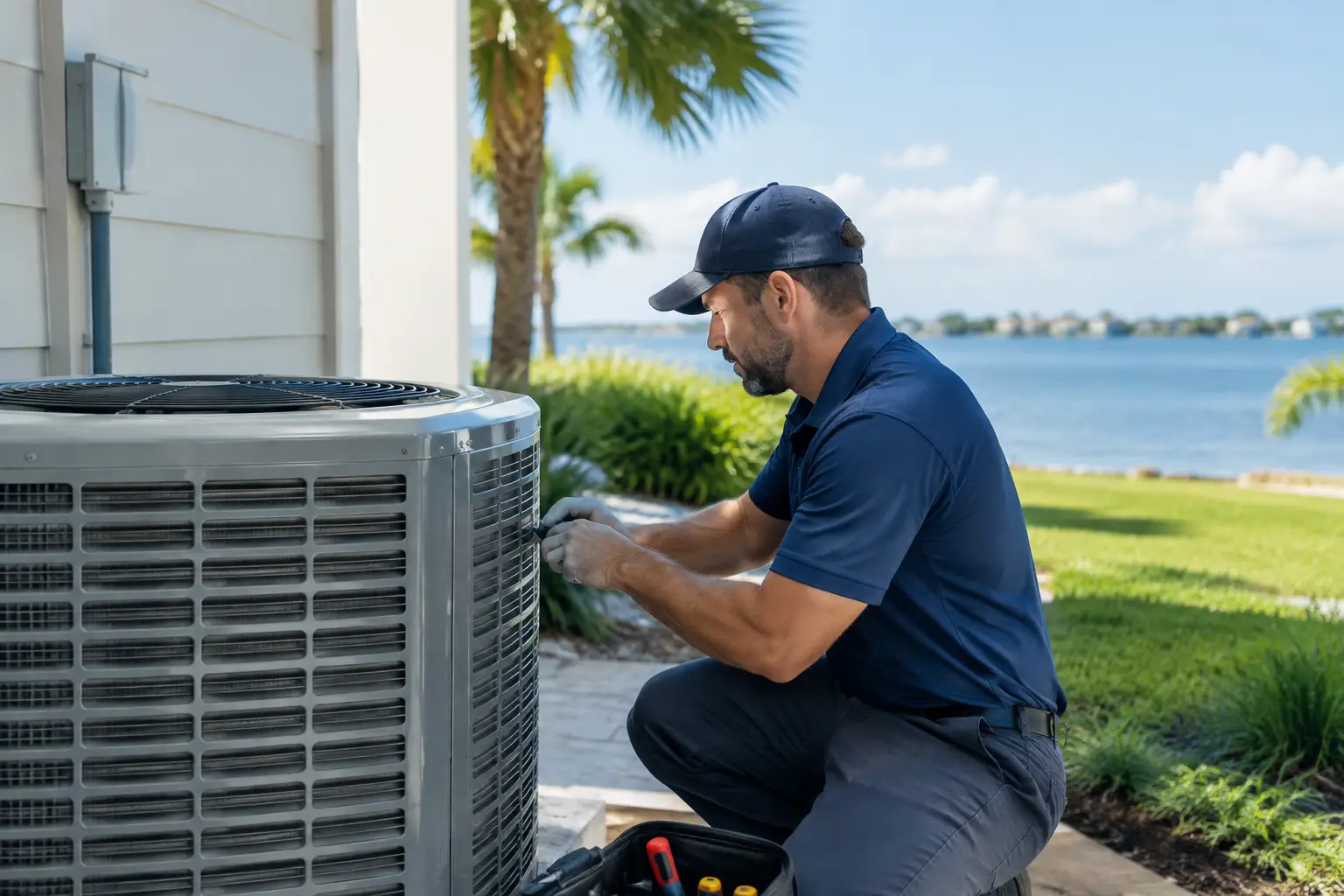
Coastal conditions also shorten the margin for error. Salt in the air can accelerate wear on outdoor components. Dirty coils, weak capacitors, refrigerant issues, clogged drains, and failing blower parts tend to show up faster when a system is pushed hard for long stretches.
A practical Corpus Christi HVAC guide for repair or replacement
Most property owners ask the same basic question when something goes wrong: should I repair this system or replace it? The honest answer is that it depends on age, condition, repair history, and how the system has been performing before the breakdown.
If your unit is relatively new and the issue is isolated, repair is often the right call. A bad capacitor, contactor, fan motor, drain line problem, or thermostat issue can usually be handled without replacing the whole system. The key is getting a proper diagnosis instead of guessing. Replacing parts without addressing the root cause can waste money fast.
Replacement starts to make more sense when the system is older, repairs are becoming frequent, or comfort has dropped off even when the unit is technically running. If you’ve rooms that never cool properly, rising utility costs, poor humidity control, or major component failure on an aging system, continuing to patch it may not be the best investment.
For businesses, downtime changes the math. A restaurant with a failing walk-in cooler or ice machine can’t wait around to see what happens next week. An office with poor cooling may lose productivity. A retail space that feels hot and humid can affect customer experience right away. In commercial settings, dependability often matters just as much as efficiency.
Signs your system needs attention now
Some HVAC problems build slowly. Others announce themselves all at once. In either case, waiting usually makes the repair more involved.
Warm air from the vents, weak airflow, short cycling, unusual noises, water around the indoor unit, frozen coils, and sudden jumps in your electric bill all deserve attention. So does a thermostat that never seems to match how the space actually feels. If the system is constantly running but not keeping up, that’s not normal for a healthy setup, even in a South Texas summer.
Commercial properties should also watch for inconsistent temperatures between zones, excess humidity, repeated breaker trips, and refrigeration temperature swings. Those issues can point to controls problems, airflow restrictions, refrigerant concerns, or failing components that won’t improve on their own.
Why installation quality matters more than sales talk
A new system can absolutely improve comfort and efficiency, but only if it’s selected and installed correctly. This is where many property owners get burned. They compare equipment models and price tags but miss the work behind the system.
A proper installation should account for building size, insulation levels, duct condition, airflow, thermostat placement, and the actual cooling demand of the space. For homes, blown-in insulation and duct improvements can sometimes make as much difference as the equipment itself. For commercial buildings, the design side is even more important, especially when multiple zones, larger occupancies, or specialty equipment are involved.
This is also where local experience matters. A contractor who understands Gulf Coast conditions is better equipped to recommend systems that can handle long runtimes, moisture load, and real-world operating demands. Fancy features are fine, but reliability and serviceability should come first.
Maintenance isn’t optional in this climate
People often think of maintenance as something you do when you’ve time. In this part of Texas, it’s part of owning the system.
Routine service helps catch worn parts before they fail during peak demand. It also keeps coils cleaner, airflow steadier, and drain systems working properly. That matters because even a minor restriction can reduce efficiency and strain the equipment. Preventive maintenance is usually much cheaper than an emergency call during the hottest week of the year.
For homeowners, regular tune-ups can help with comfort, system life, and monthly operating cost. For commercial clients, maintenance is about protecting continuity. If your business depends on refrigeration, ice production, or stable indoor conditions, planned service is one of the simplest ways to reduce surprises.
A maintenance program can be especially useful if you’d rather not keep track of service intervals yourself. The best ones aren’t about selling extras. They’re about keeping equipment dependable and addressing wear before it becomes downtime.
Indoor air quality and efficiency go hand in hand
A lot of comfort complaints aren’t strictly cooling problems. Dust buildup, stale air, uneven circulation, and humidity issues often trace back to duct leakage, dirty components, poor filtration, or insulation gaps.
That’s why a good HVAC plan should look beyond the condenser outside the building. Duct cleaning may help in the right situation, especially if there’s heavy buildup affecting airflow. Better filtration can improve indoor air quality, but it has to match the system so static pressure doesn’t rise too much. Added insulation can help reduce heat gain and keep temperatures more consistent.
For some buildings, a heat pump may make sense. For others, a traditional split system is the better fit. In larger commercial spaces, VRF and VRV systems can offer strong zoning control and efficiency, but they require experienced service and careful design. There’s no one-size-fits-all answer, and that’s exactly why honest guidance matters.
What homeowners should ask before approving work
You don’t need to be an HVAC expert to make a good decision. You just need clear answers. Ask what failed, why it failed, whether the repair addresses the root issue, and how the rest of the system looks. If replacement is being recommended, ask what problem the new system solves beyond the immediate breakdown.
You should also ask about warranty coverage, expected lifespan, maintenance needs, and whether ductwork or insulation should be addressed at the same time. If the pricing is vague or the explanation feels rushed, that’s a red flag. Good service should feel straightforward, not pressured.
What commercial operators should prioritize
Commercial HVAC and refrigeration decisions are rarely just about equipment. They’re about uptime, compliance, comfort, and operating cost.
Facility managers and business owners should look for a service partner who can handle more than standard AC repair. If your property relies on walk-ins, reach-ins, ice machines, or specialized system controls, broad technical capability matters. So does response time. One dependable provider is often more valuable than juggling several vendors who only handle part of the problem.
That’s one reason companies like Precision Air build around both residential and commercial service. In a market where properties can range from homes to restaurants to multi-zone facilities, practical experience across systems makes a real difference.
Choosing service that holds up over time
Fast service matters, especially during an emergency. But speed without workmanship isn’t enough. The real goal is to fix the problem correctly, explain your options clearly, and help the system perform better after the call than it did before.
That means fair pricing, quality parts, solid installation practices, and follow-through. It also means being realistic. Not every old system is worth saving. Not every new system needs the highest-end option. The right recommendation should fit the building, the usage, and the budget.
If you own a home, think in terms of comfort, reliability, and utility cost over the next several years. If you manage a business, think about service interruptions, customer impact, and total operating risk. In both cases, HVAC is less about the box itself and more about how well the whole system supports your daily life.
The best time to get ahead of HVAC trouble is before your system forces the decision. A little planning now can save you from a much harder call when the heat is at its worst.
Further reading: Corpus christi hvac guide on mayoclinic.org.
In short, corpus christi hvac guide rewards a careful, informed approach. Use this corpus christi hvac guide guide as a starting framework, adapt it to your situation, and re-check the facts whenever the topic moves.
#Corpus Christi HVAC #Gulf Coast #HVAC systems #indoor air quality #oversized unit
Related Posts
 Gulf Coast HVAC Guide for Homes and Businesses — Best Guide 2026
 Walk In Freezer Guide for South Texas Businesses (2026)
 12 Best AC Maintenance Tips for South Texas