From what I have seen, If one room in your house feels muggy while another stays cold, you’re not imagining it. Poor circulation is one of the most common comfort problems behind hot spots, stale air, rising utility bills, and an AC system that seems to run forever. Knowing how to improve indoor airflow starts with understanding that airflow isn’t just about stronger air conditioning. It’s about how air moves through your home, where it gets blocked, and whether your system can deliver and return air the way it was designed to.
In South Texas, that matters even more. Heat and humidity put extra pressure on residential and light commercial HVAC systems, and small airflow issues tend to show up fast. A clogged filter, a closed vent, or leaky ductwork can turn into uneven temperatures and poor comfort long before the equipment itself fails.
How to Improve Indoor Airflow Without Guesswork
Here is the part nobody tells you: The first step is to look at the basics people often overlook. Supply vents need to be open and clear, and return vents need space to pull air back to the system. Furniture, rugs, curtains, and storage bins can all interfere with airflow. Even something as simple as a couch pushed over a floor vent can reduce circulation in the entire room.
Airflow also depends on balance. Many homeowners close vents in unused rooms hoping to save money, but that can create pressure problems inside the duct system. In some homes it makes the occupied rooms less comfortable, not more. The system was usually sized to move a certain amount of air, and restricting that path can strain performance.
If your airflow problem is mild, these small changes may help right away. If the issue is persistent, especially in multiple rooms, it usually points to a deeper problem in the system.
Check the air filter first
A dirty air filter is one of the simplest and most common reasons airflow drops. When the filter is loaded with dust and debris, your system has to work harder to pull air through it. That can reduce air movement at the vents, increase operating costs, and put added wear on components.
The right replacement schedule depends on the filter type, indoor air quality, pets, occupancy, and how often the system runs. In a high-demand cooling season, some homes need checks every month. Waiting until the filter looks obviously dirty is usually too late.
There’s a trade-off here. Higher-efficiency filters can improve indoor air quality, but if they’re too restrictive for the system, they may hurt airflow. That’s one reason filter selection should match the equipment, not just the packaging claims.
Make sure return air can get back to the unit
Many people focus on the vents blowing air out and forget the air has to come back. Return airflow is just as important as supply airflow. If interior doors stay closed for long periods and the rooms don’t have a good return path, pressure can build up and circulation suffers.
This shows up as rooms that feel stuffy, doors that move slightly when the system turns on, or temperature differences from one area to another. In some cases, adding transfer grilles, jump ducts, or return improvements can make a major difference. That’s not a one-size-fits-all fix, but it’s often part of the answer in homes with chronic airflow problems.
Fans help, but they don’t fix every airflow problem
Ceiling fans and portable fans can improve comfort because they move air across your skin and help rooms feel cooler. They’re useful tools, especially in rooms that feel stagnant. But fans don’t lower the actual air temperature, and they don’t correct duct restrictions, undersized returns, or equipment issues.
That distinction matters. If a room only feels comfortable when the fan is on high all day, the HVAC system may not be delivering enough conditioned air there in the first place. Fans can support better circulation, but they shouldn’t have to compensate for a struggling system.
For best results, make sure ceiling fans rotate in the correct direction for the season. During cooling season, you generally want the blades set to push air downward. It’s a small adjustment, but it can help rooms feel more comfortable without lowering the thermostat.
Ductwork often causes hidden airflow issues
If you’ve replaced filters, cleared vents, and still have weak airflow, the duct system deserves a closer look. Ducts can leak, sag, separate, collect debris, or be poorly sized for the layout of the building. Those problems are easy to miss because they happen out of sight, usually in attics, crawlspaces, or above ceilings.
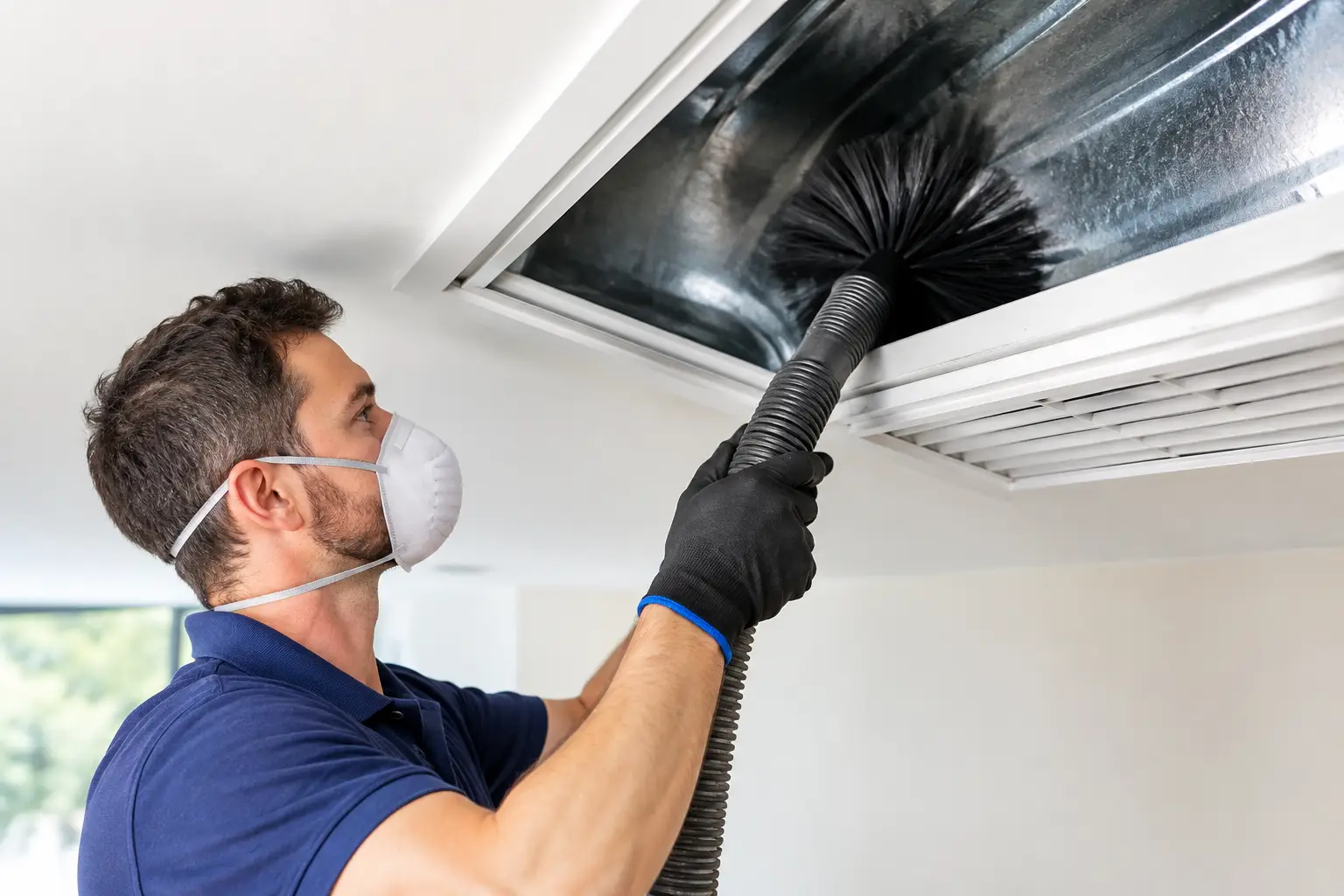
Leaky ducts waste conditioned air before it ever reaches the room. In hot attic spaces, that means paying to cool air that never makes it where you need it. Dirty or damaged ducts can also affect air delivery and indoor air quality. In some homes and commercial spaces, duct cleaning helps when buildup is substantial, but cleaning alone won’t fix disconnected runs, crushed sections, or design problems.
This is where professional testing matters. Measuring static pressure, airflow, and duct performance gives a much clearer picture than guessing from room temperatures alone. A system can still turn on and cool while moving far less air than it should.
Insulation plays a bigger role than many people think
Sometimes what feels like an airflow problem is partly an insulation problem. If your attic is under-insulated, rooms can gain heat quickly and feel uncomfortable even when air is coming through the vents. The HVAC system then runs longer trying to keep up, which makes it seem like airflow is weak.
In Gulf Coast conditions, heat gain and humidity are constant factors. Improving insulation doesn’t increase airflow directly, but it reduces the load on the system and helps conditioned air do its job more effectively. In many cases, comfort improves because the home holds temperature more evenly.
Humidity can make airflow problems feel worse
When indoor humidity is high, air feels heavier and rooms feel warmer than the thermostat reading suggests. That’s why some homes feel sticky even when the AC appears to be working. People often assume they need more airflow, but part of the issue may be moisture control.
A properly operating air conditioning system helps remove humidity as it cools. But if the unit is oversized, short cycles, has airflow problems, or isn’t maintained properly, humidity control can suffer. In those situations, improving indoor comfort may require correcting both airflow and moisture removal.
For homes and businesses in humid climates, this is a key point. More airflow isn’t always better if it comes at the expense of dehumidification. The right setup is balanced airflow, proper run time, and equipment matched to the space.
When your AC system is the real problem
There are times when poor airflow is a symptom of a mechanical issue rather than a maintenance issue. A failing blower motor, dirty evaporator coil, frozen coil, damaged ductwork, or incorrectly sized equipment can all reduce circulation. In commercial settings, zoning issues, neglected maintenance, or system design limitations can also affect how air moves through the building.
If you notice very low airflow from multiple vents, rooms that never cool down, unusual noises, rising energy bills, or ice around the indoor unit, it’s time for a professional inspection. Waiting usually doesn’t make the problem cheaper. It can turn a fixable airflow issue into a repair that affects the entire system.
Routine maintenance helps catch these problems early. That’s one reason service programs matter. A well-maintained system is more likely to move the right amount of air, control humidity, and avoid the slow decline in performance many owners don’t notice until comfort drops off.
The smartest way to improve airflow long term
If you want to know how to improve indoor airflow for the long haul, think beyond quick fixes. Replace filters on schedule, keep vents and returns unobstructed, and pay attention to rooms that consistently feel different from the rest of the house. Those patterns usually tell you something useful.
When the basics are covered and the problem remains, a professional evaluation is the next practical step. The answer may be duct repair, return air improvements, blower service, insulation upgrades, or a full system adjustment. The right fix depends on the building, the equipment, and how the space is used.
At Precision Air, that kind of problem-solving starts with looking at the whole system instead of treating airflow as a guess. Better comfort usually comes from several small things working correctly together, not one miracle fix.
A house or business shouldn’t feel stuffy, uneven, or harder to cool than it used to. When airflow is right, the space feels cleaner, more comfortable, and easier on your equipment. That’s not a luxury in South Texas heat. It’s part of having a system that does its job right the first time.
Further reading: How to improve indoor airflow on theguardian.com.
In short, how to improve indoor airflow rewards a careful, informed approach. Use this how to improve indoor airflow guide as a starting framework, adapt it to your situation, and re-check the facts whenever the topic moves.
Related Posts
 Air Conditioner Financing Review for South Texas
 Best Duct Cleaning Methods for Cleaner Air
 Corpus Christi AC Repair Guide for Fast Answers — Best Guide 2026