A failed cooler is not a minor inconvenience when your business depends on fresh inventory. It can mean unsafe food temperatures, lost product, delayed service, and a stressful call to a technician after hours. This commercial kitchen refrigeration guide covers the equipment decisions and maintenance habits that help restaurants, convenience stores, bars, healthcare facilities, and other South Texas businesses protect their products and keep operations moving.
- Start With Temperature, Capacity, and Workflow
- Essential Considerations in Our Commercial Kitchen Refrigeration Guide
- What Makes Commercial Refrigeration Work Reliably
- Preventive Maintenance That Pays for Itself
- Repair or Replace? Make the Decision With the Full Cost in View
- Choose Service Support Before You Need It
Start With Temperature, Capacity, and Workflow
Essential Considerations in Our Commercial Kitchen Refrigeration Guide
Commercial refrigeration is not one-size-fits-all. The right equipment depends on what you store, how often staff access it, your available space, and how much heat the kitchen produces. A unit that looks adequate on paper can struggle if it is undersized, installed in a hot location, or constantly opened during a busy service.
For refrigerated food storage, the target is generally 41°F or below. Freezers should typically hold 0°F or below. Those numbers are not just operational preferences. They are central to food safety, product quality, and compliance with your local health requirements. A dependable thermometer inside each unit is a simple safeguard, but it should not replace regular professional checks of the refrigeration system itself.
Capacity deserves careful thought. Buying the largest unit available is not always the answer, especially if it creates poor kitchen flow or requires staff to walk farther during prep. On the other hand, cramming inventory into an undersized reach-in blocks airflow and forces the system to run longer. Plan capacity around your busiest periods, delivery schedule, menu volume, and expected growth.
Reach-Ins, Walk-Ins, and Prep Tables
Reach-in refrigerators and freezers are practical for line stations, prep areas, and back-of-house storage that staff need to access throughout the day. They are available in one-, two-, and three-section configurations. Solid doors usually provide better insulation and storage efficiency, while glass doors help staff see inventory quickly in retail displays or beverage applications.
Walk-in coolers and freezers are built for larger inventories and frequent deliveries. They offer substantial storage, but they also require proper panel sealing, door alignment, drainage, electrical supply, and refrigeration sizing. A walk-in that is poorly installed or improperly maintained can waste energy around the clock.
Refrigerated prep tables put ingredients within reach of cooks, but they have a demanding job. Their pans are opened frequently, exposed to warm kitchen air, and sometimes overloaded. They work best when food pans are filled to the manufacturer’s recommended level and lids are kept closed whenever possible.
Undercounter units save space and can be a smart fit for bars, compact kitchens, and service stations. They need adequate ventilation around the condenser, though. Hiding a refrigeration unit tightly inside cabinetry without the required airflow can lead to recurring overheating problems.
What Makes Commercial Refrigeration Work Reliably
Every commercial refrigeration system removes heat from the cabinet and releases that heat elsewhere. The compressor, condenser, evaporator coil, fans, controls, refrigerant charge, door gaskets, and drainage components all have a role. When one part falls behind, the unit may still appear to run while temperatures slowly rise.
In Corpus Christi and across the Coastal Bend, high heat and humidity add stress to equipment. A condenser that is already coated with grease, dust, or lint cannot release heat efficiently. Place that unit near a hot cooking line or in a poorly ventilated room, and the system may run almost continuously. That raises energy use, shortens component life, and increases the chance of a breakdown during the worst possible time.
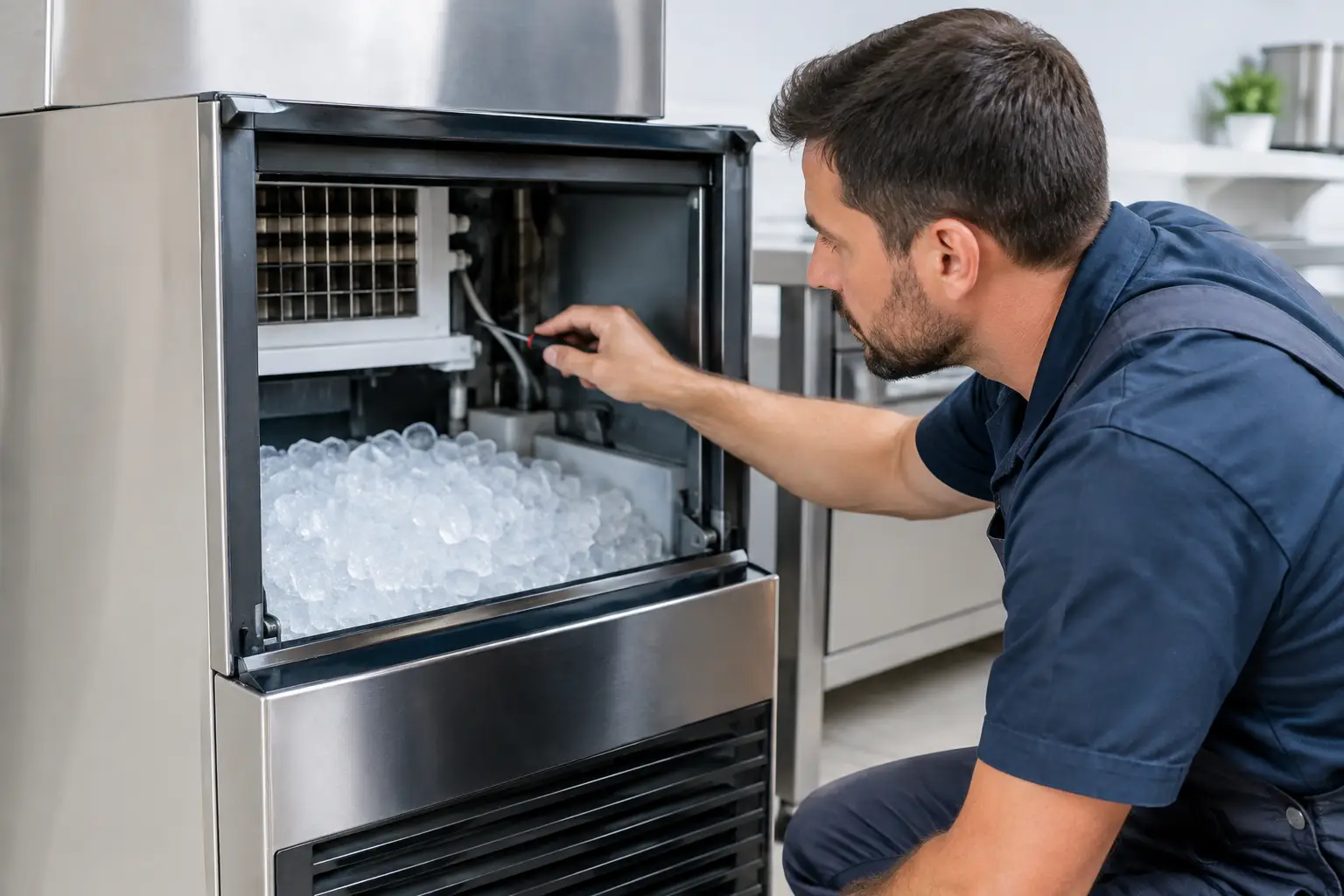
Ice machines need similar attention. They are refrigeration equipment, but water quality, filtration, scale buildup, sanitation, drain performance, and ambient conditions all affect the final result. An ice machine can make ice that looks acceptable while internal scale or sanitation issues are developing. Regular cleaning and scheduled service protect both output and food safety.
The Parts Staff Can Check Every Day
Kitchen staff do not need to diagnose compressors or handle refrigerant. They can, however, spot problems early and report them before a failure becomes an emergency.
Watch for temperature readings that drift higher than normal, excessive frost, water beneath the unit, unusual noises, a door that will not seal, warm cabinet walls, or a compressor that seems to run nonstop. These symptoms can point to anything from a worn gasket or blocked drain to dirty coils, a fan issue, or a more serious refrigeration fault.
Keep a simple temperature log, especially for units that hold high-value or high-risk foods. Logging temperatures at opening, during the busiest period, and at closing gives managers useful information. It also helps a service technician identify whether a problem is constant, intermittent, or connected to certain kitchen conditions.
Preventive Maintenance That Pays for Itself
Commercial refrigeration maintenance is less about avoiding every repair and more about catching wear before it causes product loss. Equipment that runs in a hot, greasy kitchen needs more attention than a lightly used unit in a climate-controlled office break room. The proper schedule depends on the equipment, environment, and manufacturer requirements.
A professional maintenance visit commonly includes checking operating temperatures and pressures, inspecting electrical connections and controls, examining fan motors, cleaning condenser coils, verifying door gaskets, checking drains, inspecting evaporator condition, and looking for signs of refrigerant leaks. For walk-ins, technicians should also inspect door hardware, panel condition, insulation concerns, and the overall performance of the condensing system.
Between service visits, keep condenser areas clear and follow the manufacturer’s cleaning guidance. Do not stack boxes against vents or store supplies on top of a unit where they block airflow. Train staff not to prop doors open, even for a few minutes during deliveries. Small habits have a real effect on run time and equipment life.
Avoid using sharp tools to remove frost. Puncturing an evaporator coil can turn a manageable issue into a major repair. If frost is building excessively, call for service rather than chipping at it.
Repair or Replace? Make the Decision With the Full Cost in View
A refrigeration repair is often the right choice when the unit is relatively new, the cabinet and doors are in good condition, and the issue is isolated to a serviceable component. Fan motors, controls, gaskets, drain heaters, and some electrical components can often be repaired without replacing the entire unit.
Replacement may make more sense when repairs are becoming frequent, the cabinet insulation has failed, doors no longer close properly, corrosion is extensive, or the equipment cannot reliably maintain safe temperatures. Older equipment may also use refrigerants that are more expensive or difficult to service. A low repair quote does not always mean it is the most economical decision if the unit has a pattern of failures and high energy consumption.
Before approving either option, ask for a clear explanation of the cause, the repair scope, and whether the technician sees related wear that could affect reliability. Honest recommendations should account for downtime, inventory risk, utility costs, available space, and the needs of your operation, not just the price of today’s repair.
When a Refrigeration Problem Is an Emergency
Call for service promptly if temperatures are above safe ranges and do not recover, the compressor will not start, the unit is tripping breakers, there is a burning smell, or a walk-in door will not close securely. Move food to a working unit when possible and document temperatures according to your food safety procedures.
Do not keep loading warm product into a struggling cooler in the hope that it will catch up overnight. A refrigeration system that cannot pull down temperature is telling you it needs attention. Fast action can protect inventory and prevent a small electrical or airflow issue from damaging major components.
Choose Service Support Before You Need It
The best time to establish a commercial refrigeration service relationship is before equipment fails on a Friday night or during a holiday rush. Look for a provider that understands reach-ins, walk-ins, freezers, ice machines, and the electrical and airflow issues surrounding them. Response time matters, but so do accurate diagnosis, straightforward pricing, and repairs performed correctly the first time.
For South Texas businesses, dependable refrigeration is part of protecting your reputation. Keep temperatures documented, give equipment the airflow and cleaning it needs, and do not ignore early warning signs. When a problem does arise, Precision Air can provide fast, honest, and dependable service to help keep your kitchen operating and your inventory protected.
Further reading: Commercial kitchen refrigeration guide on theguardian.com.
In short, commercial kitchen refrigeration guide rewards a careful, informed approach. Use this commercial kitchen refrigeration guide guide as a starting framework, adapt it to your situation, and re-check the facts whenever the topic moves.
Related Posts
 HVAC contractor reviews — How to Read HVAC Contractor Reviews …
 How to Troubleshoot Ice Machine Problems — Best Guide 2026