A Clearer Look at the Top Indoor Air Quality Upgrades
A home can feel cool and still have air that is uncomfortable to breathe. In South Texas, long cooling seasons, high outdoor humidity, windblown dust, pollen, pet dander, and everyday household activity all affect what moves through your HVAC system. The top indoor air quality upgrades can make a noticeable difference, but the best choice depends on the problem you are trying to solve.
- A Clearer Look at the Top Indoor Air Quality Upgrades
- 1. Use the Right HVAC Air Filter
- 2. Add a Whole‑Home Dehumidifier
- 3. Install a Whole‑Home Air Cleaner
- 4. Improve Fresh‑Air Ventilation Carefully
- 5. Address Duct Leaks, Dirt, and Airflow Problems
- 6. Consider UV Treatment for Specific HVAC Concerns
- Start With Measurements, Not Marketing
- Useful Links:
There is no single product that fixes every air quality concern. A better filter may help with dust but do little for excess humidity. A dehumidifier can make a room feel less clammy, yet it will not remove pet dander on its own. The most dependable approach starts with identifying the source, then choosing equipment that works with your existing heating and cooling system rather than against it.
For homeowners who want trustworthy guidance, the EPA’s Indoor Air Quality Basics and ASHRAE’sIAQ Standards offer helpful background on how indoor air behaves in real homes.
⭐ Top Indoor Air Quality Upgrades for South Texas Properties
For most homes and light commercial spaces, the top indoor air quality upgrades fall into a few practical categories: filtration, humidity control, ventilation, air cleaning, and duct system performance. Some upgrades are simple and affordable. Others require professional installation and are best considered alongside an AC replacement, major repair, or maintenance visit.
1. Use the Right HVAC Air Filter
The filter in your return grille or air handler is the first line of defense. Its job is to keep dust and debris from building up on the indoor coil and moving through the system. It can also capture a portion of airborne particles before they circulate through the building again.
Many properties use inexpensive fiberglass filters that offer limited particle capture. Moving to a properly sized pleated filter can improve filtration without creating unnecessary strain on the equipment. For households with pets, allergy concerns, or higher dust levels, a higher‑efficiency filter may be worthwhile.
The EPA’s Guide to Air Cleaners in the Home explains how different filters capture particles and why airflow matters.
The trade‑off is airflow. A filter with a very high MERV rating can be too restrictive for some residential systems, especially when ducts are undersized or the filter is not changed regularly. Restricted airflow can raise energy use, reduce cooling performance, and contribute to frozen coils or premature system wear. A technician can recommend a filter rating your specific system can handle safely.
Filter replacement matters as much as filter selection. In a busy household or a business with doors opening throughout the day, a filter may need attention more often than the schedule printed on its packaging.
2. Add a Whole‑Home Dehumidifier
Humidity is one of the biggest comfort issues along the Coastal Bend. When indoor humidity stays high, rooms feel sticky even when the thermostat is set low. High moisture levels can also support mold growth, worsen musty odors, and make dust mites more comfortable.
Your air conditioner removes moisture while it cools, but it may not remove enough during mild, rainy, or variable weather. This is especially common with oversized equipment that cools a space quickly and shuts off before completing a longer dehumidification cycle.
A whole‑home dehumidifier is one of the top indoor air quality upgrades because it removes moisture throughout the house and works alongside the HVAC system. It gives homeowners more control than portable units, which usually serve only one room and require frequent emptying.
Indoor humidity generally performs best around 40% to 50%, depending on the building and its occupants. If your home feels damp, has condensation around vents or windows, or develops recurring musty smells, humidity control should be a priority.
3. Install a Whole‑Home Air Cleaner
A whole‑home air cleaner is a stronger filtration option installed in or near the return side of an HVAC system. These units commonly use larger media filters with more surface area than a standard one‑inch filter. That larger surface area can capture more particles while allowing air to move with less restriction.
This upgrade is ideal for homes with multiple pets, frequent dust accumulation, allergies, or family members who are sensitive to airborne particles. It is also valuable for offices and commercial spaces where cleaner air supports a better experience for staff and visitors.
No filtration system can eliminate every indoor contaminant. It will not correct a moisture problem, clean a contaminated surface, or replace good housekeeping. But when properly sized and maintained, whole‑home filtration is one of the top indoor air quality upgrades for reducing airborne dust and common allergens.
4. Improve Fresh‑Air Ventilation Carefully
Fresh outdoor air sounds simple, but in a hot, humid climate, bringing in untreated outdoor air can create problems. Opening windows may be pleasant on a mild day, yet it can also introduce humidity, pollen, dust, and outdoor pollutants.
Mechanical ventilation provides a more controlled option. Depending on the building, an HVAC professional may recommend equipment that brings in measured outdoor air while helping manage temperature and moisture. Energy recovery ventilators and other fresh‑air strategies can be useful in tightly sealed homes, remodeled properties, and commercial buildings with occupancy requirements.
Ventilation design is not one‑size‑fits‑all. A system that brings in too much humid air can increase the cooling and dehumidification load. A system that brings in too little outdoor air may leave odors and pollutants lingering indoors. Proper sizing, drainage, duct connections, and controls make the difference.
The CDC’s ventilation guidance explains why balanced ventilation matters for comfort and health.
5. Address Duct Leaks, Dirt, and Airflow Problems
Your ductwork has a direct effect on the air you breathe. Leaky return ducts can pull dusty attic air, insulation fibers, or unconditioned air into the system. Supply leaks waste cooled air in spaces where nobody benefits from it. Both issues can make some rooms uncomfortable and force the AC to work harder.
Duct sealing is often more valuable than homeowners expect. By keeping conditioned air inside the duct system and limiting unwanted air infiltration, it can improve comfort, efficiency, and air cleanliness at the same time.
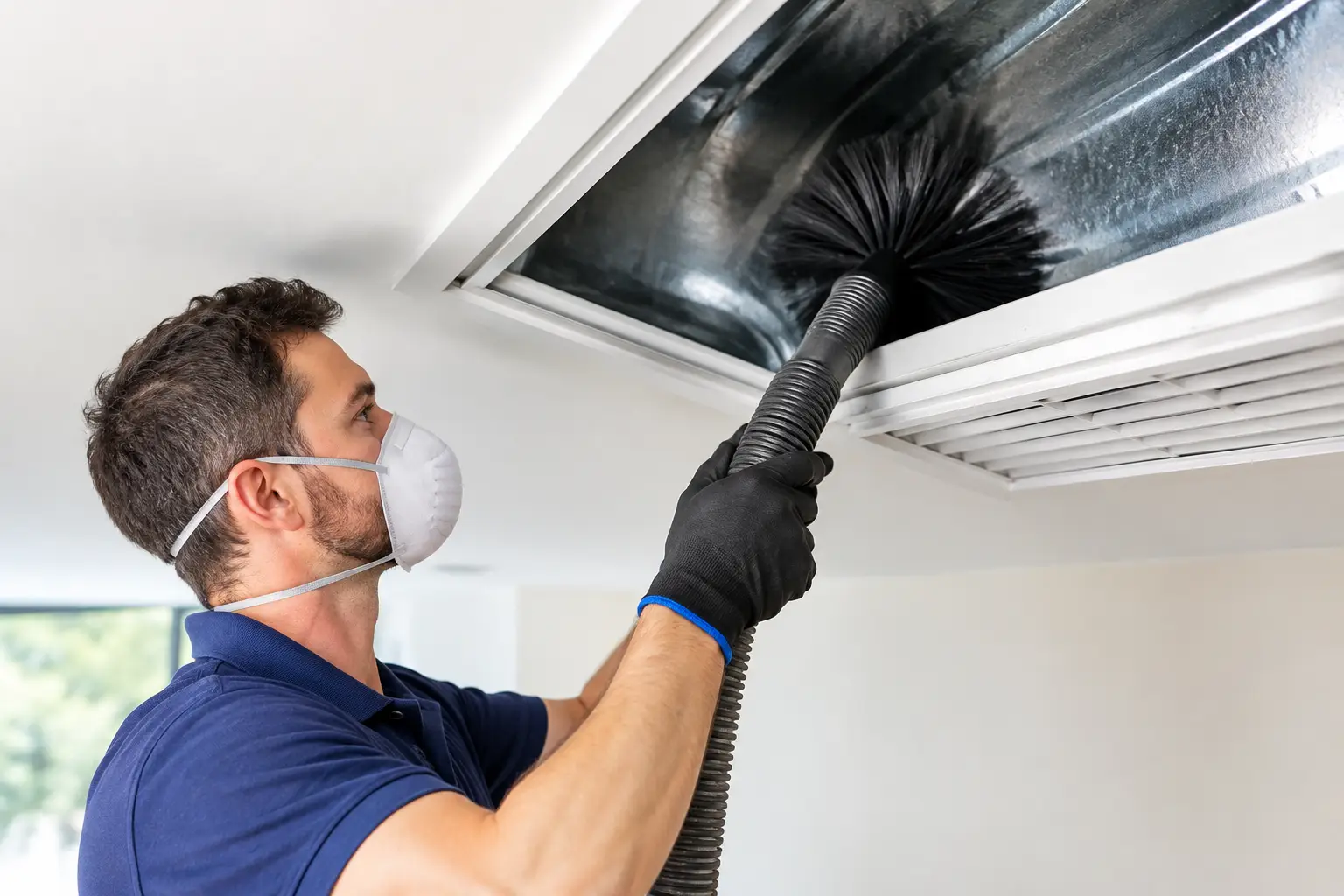
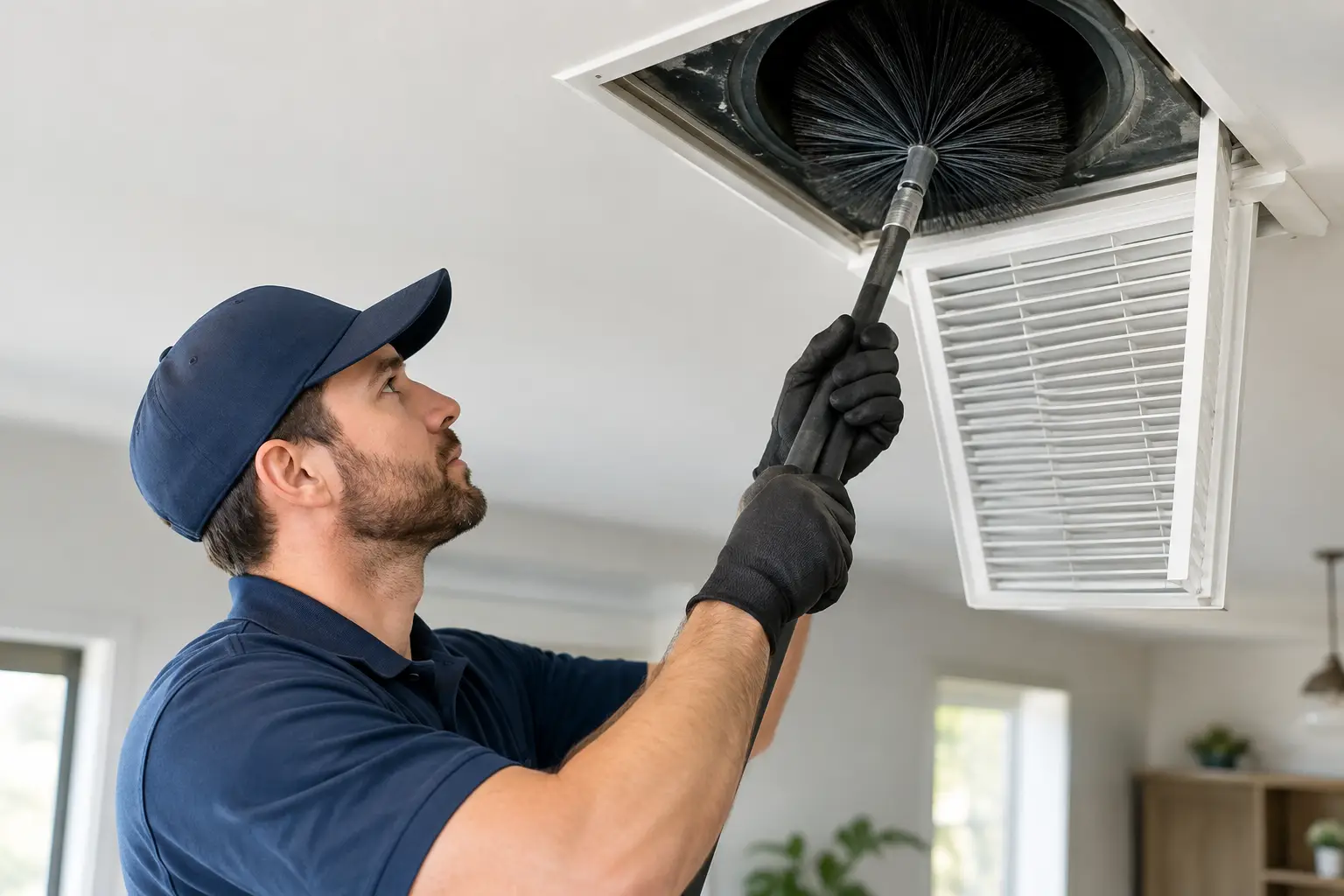
Duct cleaning can also help in the right situation. If ducts are visibly contaminated, have heavy dust buildup, show signs of pest activity, or have been affected by construction debris, professional cleaning may be appropriate. The NADCA duct cleaning standards outline when cleaning is justified and how it should be performed.
A complete evaluation should also include the blower, evaporator coil, drain system, and return‑air setup. These components influence airflow, moisture removal, and the cleanliness of the air moving through the building.
6. Consider UV Treatment for Specific HVAC Concerns
UV lights are commonly installed near an evaporator coil or inside the air handler. Their primary purpose is to help control microbial growth on damp HVAC surfaces, particularly where condensation naturally occurs.
This can be useful when a system has recurring biological buildup around the coil or drain pan. However, UV treatment should be viewed as a targeted HVAC upgrade, not a replacement for filtration, cleaning, drainage repair, or humidity control.
Avoid products that generate ozone for occupied spaces. Ozone can irritate the lungs and is not the answer to ordinary indoor air quality concerns. The EPA’s ozone safety information explains why ozone‑producing devices should be avoided.
Start With Measurements, Not Marketing
Indoor air quality products are easier to evaluate when you have useful information. A basic indoor humidity monitor can reveal whether moisture is a likely issue. An air quality monitor may help identify patterns related to particles, carbon dioxide, or volatile organic compounds, though readings should be interpreted carefully.
Pay attention to practical signs as well: dusty furniture shortly after cleaning, uneven temperatures, musty odors, frequent allergy symptoms indoors, condensation, weak airflow, or rooms that never seem comfortable.
Precision Air can inspect the system behind the symptoms, including filtration, duct condition, drainage, airflow, and humidity performance. That matters because the top indoor air quality upgrades should solve a real problem without creating a new one, such as restricted airflow or excess moisture load.
Cleaner indoor air is rarely about buying the most expensive device. It comes from a well‑maintained HVAC system, the right equipment for the building, and a clear plan for the conditions you are actually experiencing.
Ready to Improve Your Indoor Air Quality?
If your home is dealing with humidity, dust, musty odors, or allergy symptoms, the right upgrade starts with a clear evaluation — not guesswork. Precision Air provides honest inspections, practical recommendations, and indoor air quality solutions that actually match your home’s conditions.
Call Precision Air at 361‑800‑2465 or Email us at info@precisionaircc.com
Breathe easier. We’ll help you choose the upgrades that make a real difference.
Useful Links:
Comfort Club Maintenance Plan Guide for South Texas
Blown Insulation vs Fiberglass Batts Compared
-
What are the top indoor air quality upgrades for South Texas homes?
The u003cstrongu003etop indoor air quality upgradesu003c/strongu003e include better HVAC filtration, whole‑home dehumidifiers, fresh‑air ventilation, duct sealing, whole‑home air cleaners, and targeted UV treatment. These upgrades address humidity, dust, odors, and airborne allergens common in the Coastal Bend.
-
How do I know which top indoor air quality upgrades I actually need?
Start by identifying the source of the issue. Dust may require filtration or duct sealing. Musty odors may point to humidity or drainage problems. Allergy symptoms often benefit from air cleaning or ventilation improvements. A professional HVAC evaluation helps determine which u003cstrongu003etop indoor air quality upgradesu003c/strongu003e solve the real problem.
-
Do the top indoor air quality upgrades replace regular HVAC maintenance?
No. Even the best u003cstrongu003etop indoor air quality upgradesu003c/strongu003e depend on proper HVAC maintenance. A dirty coil, clogged drain, or weak airflow can limit the effectiveness of filtration, dehumidifiers, or air cleaners.
-
Are whole‑home air cleaners one of the top indoor air quality upgrades?
Yes. Whole‑home air cleaners are among the u003cstrongu003etop indoor air quality upgradesu003c/strongu003e because they capture more particles than standard filters and help reduce dust, pet dander, and allergens throughout the entire home.
-
Is a dehumidifier considered one of the top indoor air quality upgrades?
Absolutely. In South Texas, humidity control is essential. A whole‑home dehumidifier is one of the u003cstrongu003etop indoor air quality upgradesu003c/strongu003e because it reduces moisture, prevents musty odors, and improves comfort even when the AC is running.
-
Do UV lights count as top indoor air quality upgrades?
UV lights can be one of the u003cstrongu003etop indoor air quality upgradesu003c/strongu003e when used correctly. They help control microbial growth on HVAC surfaces but should be paired with proper filtration, drainage, and humidity control.
-
Can duct cleaning be part of the top indoor air quality upgrades?
Yes — when ducts are contaminated, dusty, or leaking. Duct cleaning and duct sealing can be valuable u003cstrongu003etop indoor air quality upgradesu003c/strongu003e, especially after construction, pest activity, or water intrusion.
-
Should I install multiple top indoor air quality upgrades at once?
Only if the system evaluation supports it. Some homes need just one upgrade, while others benefit from a combination of filtration, humidity control, and duct improvements. The best results come from choosing u003cstrongu003etop indoor air quality upgradesu003c/strongu003e based on actual symptoms, not guesswork.
#cleaning #drainage repair #filtration #indoor air quality
Related Posts
 Best Duct Cleaning Methods for Cleaner Air
 Corpus Christi AC Repair Guide for Fast Answers — Best Guide 2026
 Top signs duct cleaning needed: Top Signs Duct Cleaning Is Nee…