A South Texas air conditioner can run hard for most of the year. By the time it starts blowing warm air, freezing up, or driving up your electric bill, a small maintenance issue may already be an expensive repair. Knowing how to schedule HVAC maintenance before peak demand gives you more appointment options, helps prevent surprise breakdowns, and keeps your equipment ready for the heat.
For homeowners, that usually means planning around the cooling season instead of waiting for a problem. For businesses, it also means protecting employee comfort, customer experience, inventory, and operations. A restaurant with a failing ice machine or a retail space with no cooling does not have the luxury of waiting until next week.
When to Schedule HVAC Maintenance
For most homes in the Coastal Bend, schedule air conditioning maintenance once a year, ideally in spring before the hottest stretch of the year arrives. March through May is often the best window. Your technician can identify worn parts, airflow problems, drainage concerns, and refrigerant issues before your system is under daily strain.
If you have a heat pump, two visits per year can make sense: one before cooling season and another before the cooler months. Heat pumps work year-round, so they benefit from more frequent attention than a system used only for air conditioning.
Commercial equipment may need a different schedule. Restaurants, medical offices, retail stores, multifamily properties, and facilities with long operating hours often need quarterly or seasonal service. Refrigeration equipment, walk-ins, reach-ins, ice machines, and heavily used HVAC systems can require more frequent checks because downtime has a direct effect on business operations.
The best time is not always the same for every property. An older system, a home with pets, a dusty environment, a property near the coast, or equipment that runs nearly nonstop may need more than an annual visit. Salt air, humidity, and long cooling seasons can be tough on outdoor components in South Texas.
How to Schedule HVAC Maintenance the Right Way
Start by looking at your last service invoice or maintenance record. If it has been close to a year since the system was inspected, call before the summer rush. If you cannot remember the last visit, treat that as a good reason to schedule one now.
When you contact an HVAC company, be ready to share the system type, approximate age, and any concerns you have noticed. You do not need to diagnose the problem yourself. Clear details simply help the technician arrive prepared. Mention issues such as weak airflow, rooms that stay warm, high humidity, unusual noises, water near the indoor unit, rising utility costs, or frequent thermostat adjustments.
For a commercial appointment, provide the equipment type and location, business hours, access requirements, and whether the work needs to happen before opening, after closing, or during a low-traffic period. A good service company will help plan maintenance around your operations when possible.
Before confirming the appointment, ask what the maintenance visit includes and whether the company will explain recommended repairs separately from routine service. Honest pricing starts with clarity. You should know what is covered, what may cost extra, and whether any repairs are urgent or can be planned for later.
What a Proper Maintenance Visit Should Include
HVAC maintenance is more than changing an air filter. A thorough visit should focus on safety, performance, airflow, drainage, and the condition of major components. Exact steps vary by system, but a technician should inspect the equipment carefully and explain what they find in plain language.
A typical air conditioning maintenance visit may include checking electrical connections, testing capacitors and contactors, inspecting the blower, examining refrigerant performance, cleaning or assessing coils, checking the condensate drain, testing thermostat operation, and measuring system performance. The technician should also look for signs of corrosion, damaged wiring, loose components, and restricted airflow.
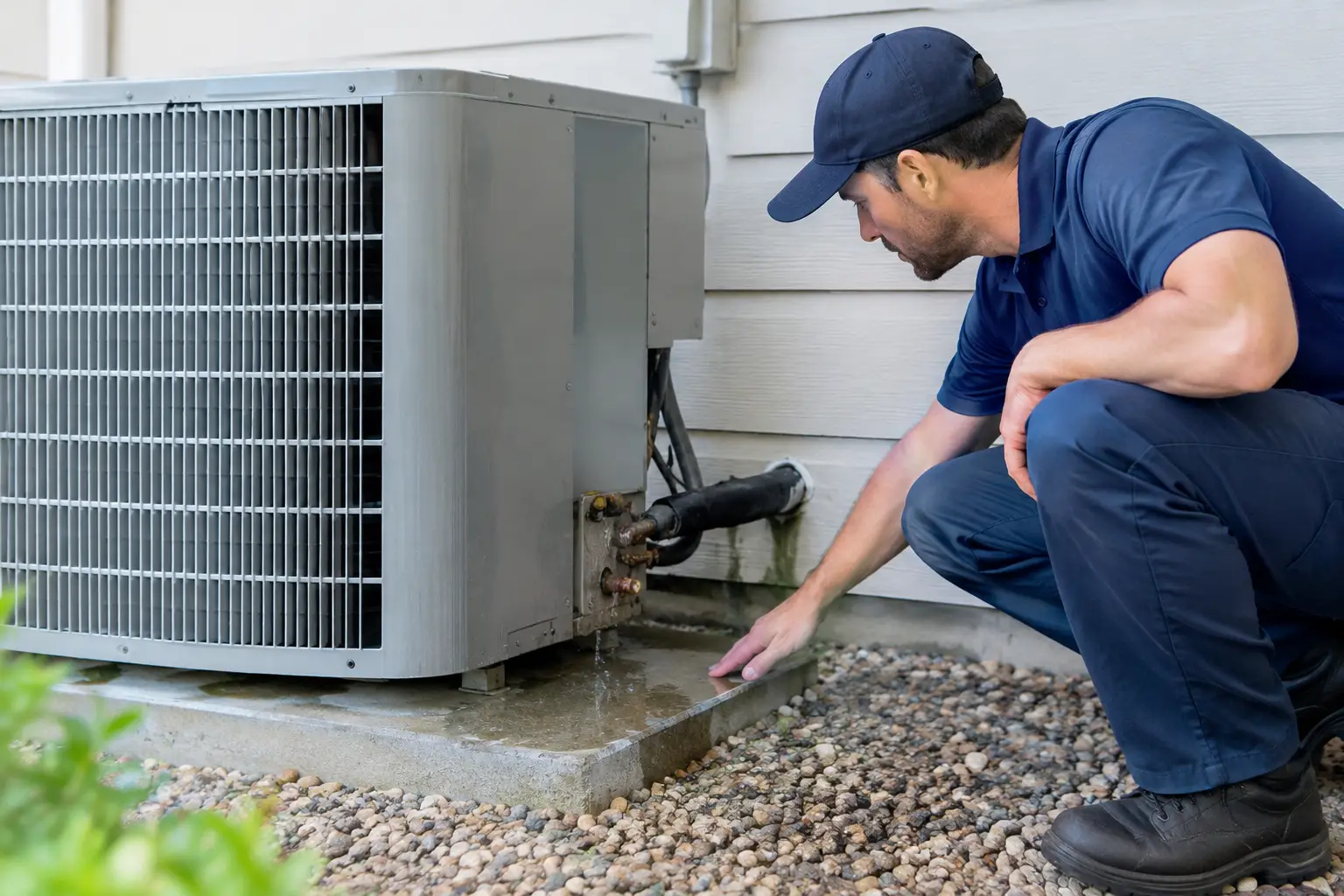
Drainage deserves special attention in humid weather. A clogged condensate line can lead to water damage, high indoor humidity, or a system shutdown. It is a common problem that is often easier and less costly to address during maintenance than after it causes a leak.
For commercial refrigeration and ice equipment, service may include checking temperatures, door seals, airflow, controls, drain lines, condenser cleanliness, and refrigeration components. These checks help protect food safety, product quality, and equipment reliability.
Prepare Your Home or Business for the Appointment
You do not need to do much before the technician arrives, but a little preparation can make the visit more productive. Clear access around the indoor unit, outdoor condenser, thermostat, and electrical panels. If storage, furniture, landscaping, or equipment blocks access, move it when practical.
Replace or have a replacement air filter available if you know the correct size. A dirty filter can restrict airflow and make a healthy system appear to have a larger problem. If you are unsure which filter to buy or how often to change it, ask during the appointment. The right filter depends on the system, household needs, and whether you have pets, allergies, or indoor air quality concerns.
Make a brief note of any symptoms you have noticed. Include when the issue happens, whether it affects all rooms or one area, and whether it occurs at certain times of day. For business owners and facility managers, ask employees to report recurring comfort complaints before the appointment. That information can point the technician toward issues that may not appear during a short inspection.
Do Not Wait for a Breakdown
Preventive maintenance is meant to catch problems early, but it cannot guarantee that every part will last forever. Capacitors can fail suddenly, motors can wear out, and severe weather can create unexpected problems. Still, regular service gives you a better chance of spotting weak components before they leave you without cooling.
Schedule service sooner than your annual appointment if you notice warning signs such as these:
- Warm air, reduced airflow, or uneven temperatures between rooms
- A new grinding, buzzing, rattling, or squealing sound
- Water around the indoor unit or repeated drain line backups
- Short cycling, frozen coils, or a thermostat that cannot hold the set temperature
- Utility bills that rise without a clear change in usage
For commercial refrigeration, temperature swings, excess frost, leaking water, unusual noise, and doors that do not seal properly should be addressed quickly. A minor equipment issue can become product loss or an interruption to service if it is ignored.
Consider a Maintenance Membership
The hardest part of maintenance is often remembering to schedule it. A maintenance membership can remove that burden by putting your system on a regular service schedule. Depending on the plan, it may also provide priority scheduling, repair discounts, or other benefits.
This is especially useful for busy households and businesses with multiple pieces of equipment. Rather than reacting to every problem individually, you build a service history and give technicians a clearer view of how the system has performed over time. That history can help when deciding whether a repair is worthwhile or replacement is the better long-term investment.
Precision Air’s Comfort Club is designed for customers who want dependable, ongoing attention to their heating and cooling equipment. The goal is straightforward: reduce avoidable surprises and help systems perform efficiently through demanding South Texas weather.
Ask the Questions That Matter
At the end of a maintenance visit, ask the technician to separate immediate safety or reliability concerns from items to monitor. A professional should be able to explain what the issue is, why it matters, and what could happen if you wait.
It is also reasonable to ask about the expected condition of your system, not just today’s repair needs. If the equipment is aging, needs frequent repairs, or struggles to cool the building during extreme heat, planning ahead can be far less stressful than making a replacement decision during an emergency.
Book maintenance before your schedule and the weather force the issue. A convenient service visit now can protect your comfort, your budget, and the equipment you depend on when the next hot South Texas day arrives.
Further reading: How to schedule HVAC maintenance on mayoclinic.org.
In short, how to schedule HVAC maintenance rewards a careful, informed approach. Use this how to schedule HVAC maintenance guide as a starting framework, adapt it to your situation, and re-check the facts whenever the topic moves.
Related Posts
 When to Replace Ductwork: 8 Signs to Watch — Best Guide
 AC Leaking Water? Causes, Fixes, and When to Call — Best Guide…