Your air conditioner works harder in South Texas than it does in most parts of the country. Long cooling seasons, high humidity, salt air near the coast, and airborne dust can turn a small maintenance issue into an expensive repair. These best AC maintenance tips focus on the work that helps residential and commercial systems cool reliably when demand is at its highest.
A little attention from the owner goes a long way, but some tasks belong with a trained HVAC technician. The goal is not to take apart your equipment. It is to keep airflow clear, catch warning signs early, and schedule professional service before a breakdown disrupts your home, tenants, customers, or staff.
Best AC Maintenance Tips to Handle Year-Round
1. Change the air filter before airflow drops
A dirty filter is one of the most common causes of weak cooling, frozen evaporator coils, and high utility bills. As dust builds up, your system has to work harder to move air through the home or business. That extra strain can shorten the life of the blower motor and compressor.
Check standard one-inch filters every 30 days during heavy-use months. Many homes need a replacement every one to three months, while homes with pets, construction dust, allergies, or frequent foot traffic may need changes more often. Commercial properties vary widely, so filter schedules should match the building’s occupancy and equipment requirements.
Do not assume a higher-rated filter is always better. A very dense filter can restrict airflow if the system was not designed for it. Use the filter type recommended for your equipment, or ask a technician before changing to a higher MERV rating.
2. Keep the outdoor condenser clear
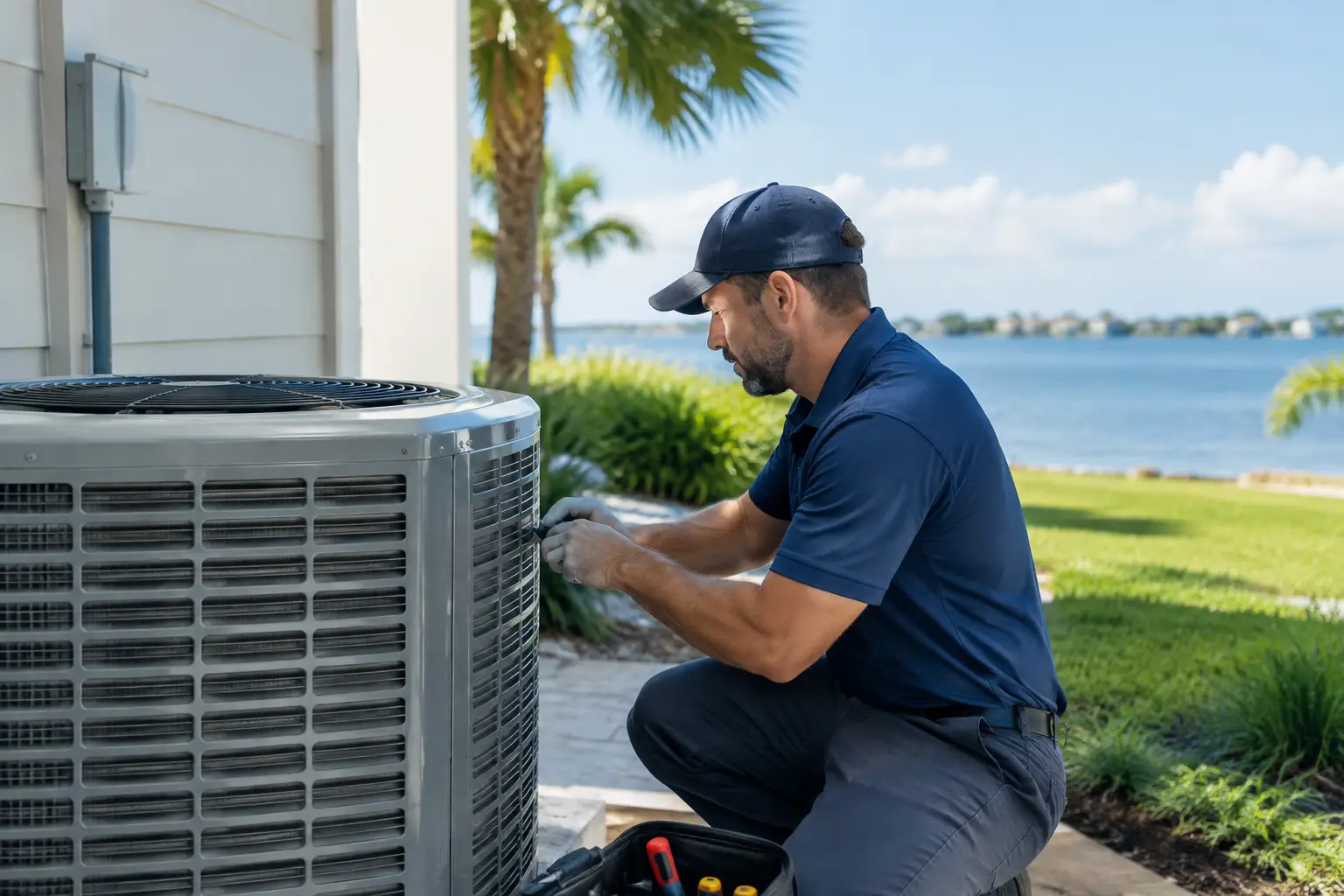
The outdoor unit releases heat from your building. When grass clippings, leaves, coastal debris, or stacked storage block it, the system cannot reject heat efficiently. That can lead to longer run times, poor cooling, and added wear on the compressor.
Keep at least two feet of open space around the condenser. Trim shrubs back, remove loose debris, and make sure lawn crews do not blow grass directly into the coil. Never cover the unit while it is operating, and do not place furniture, pallets, or supplies against it.
A gentle rinse with a garden hose can remove light surface dirt from the coil fins. Turn the system off first, use low water pressure, and spray from the inside outward when accessible. Bent fins and heavily impacted coils need professional cleaning. A pressure washer can damage the coil and create a much larger problem.
3. Pay attention to your drain line
In Corpus Christi and across the Coastal Bend, humidity creates a steady amount of condensation inside an air conditioner. That moisture drains through a condensate line. Algae, dust, and sludge can clog the line, causing water leaks, ceiling damage, musty odors, or a system shutdown if a safety switch is installed.
Check the area around the indoor unit for water, staining, or unusual moisture. If your drain line has an accessible cleanout, ask your HVAC provider what maintenance method is appropriate for your setup. Avoid pouring harsh chemicals into the system unless a technician has specifically recommended them. The right treatment depends on the drain materials and where the line terminates.
If you see water around the air handler or notice the AC stopping without explanation, schedule service promptly. Waiting can turn a simple drain clearing into drywall, flooring, or electrical repairs.
4. Keep supply vents and return grilles open
Closing vents to force more air into other rooms rarely produces the result homeowners expect. Central air systems are designed around a certain amount of airflow. Shutting off too many vents can increase pressure in the ductwork, reduce system performance, and contribute to coil freezing.
Make sure furniture, rugs, curtains, and display fixtures are not blocking supply vents or return grilles. Return vents are especially important because they bring indoor air back to the equipment. A blocked return can make a system noisy, uneven, and inefficient.
For businesses, check that shelving, inventory, and seasonal displays have not covered vents in offices, retail areas, kitchens, or storage rooms. Comfort complaints sometimes start with an airflow obstruction, not a failed AC unit.
5. Use the thermostat strategically
Set your thermostat to a comfortable, consistent temperature rather than making large adjustments throughout the day. In South Texas, setting the thermostat extremely low will not cool the building faster. It only tells the system to run longer and can raise energy use.
A programmable or smart thermostat can help when it is set up correctly. For homes, a modest temperature increase while everyone is away can reduce runtime. For commercial spaces, schedules should account for operating hours, occupancy, heat-producing equipment, and the time the building needs to cool before opening.
If rooms are consistently too warm, do not keep lowering the thermostat to compensate. The issue could involve duct leakage, insulation, a dirty coil, refrigerant levels, equipment sizing, or a thermostat problem. That calls for diagnosis, not guesswork.
6. Listen for changes and act early
Air conditioners usually give warning signs before they fail completely. A new rattling sound, buzzing, grinding, short cycling, reduced airflow, warm air from vents, or a sudden increase in electric bills deserves attention.
Musty odors can point to drain, coil, or ductwork concerns. A burning smell, repeated breaker trips, or a loud electrical hum should be treated more urgently. Turn the system off if you suspect an electrical problem and contact a qualified HVAC professional.
The most expensive repairs often follow weeks of ignored symptoms. Calling early may mean a repair can be made before it damages a compressor, motor, or control board.
Professional AC Maintenance Protects the Equipment You Cannot See
Home maintenance helps, but it cannot replace a complete HVAC tune-up. A professional visit checks the parts that require technical training, proper tools, and safe electrical procedures. This includes inspecting electrical connections, checking capacitors and contactors, measuring refrigerant performance, cleaning coils when needed, verifying blower operation, evaluating drainage, and checking the overall condition of the system.
For a heat pump, maintenance should also include heating-mode operation before cooler weather arrives. For commercial customers, the service plan may need to include multiple systems, rooftop equipment, fresh-air controls, refrigeration equipment, ice machines, or VRF/VRV components. The right schedule depends on equipment type, age, use, and the cost of downtime.
Most residential systems benefit from professional maintenance twice a year, with a cooling check before the hottest months and a heating check before winter. High-use commercial systems may require more frequent visits. Restaurants, medical facilities, retail spaces, and properties with refrigeration needs should not rely on a once-a-year approach if an equipment failure would interrupt operations or put inventory at risk.
7. Do not ignore ductwork and insulation
An AC system can be in good condition and still struggle if cooled air escapes through leaky ducts or heat enters through poorly insulated attic spaces. Hot attics are a major factor in South Texas homes, especially when ductwork runs above the ceiling.
Signs of duct or insulation trouble include rooms that never cool evenly, excessive dust, hot ceilings, unusually high bills, or long run times. A professional assessment can determine whether the issue is leaking duct connections, damaged flex duct, insufficient blown-in insulation, poor return-air design, or another building-performance concern.
This is one area where repair versus replacement depends on the condition. Small accessible duct leaks may be worth sealing. Severely deteriorated ductwork or insulation that is wet, contaminated, or badly compressed may require a more extensive solution.
8. Keep service records and plan before the emergency
Write down filter changes, repairs, unusual symptoms, and maintenance dates. For homeowners, this provides useful history when a technician is diagnosing recurring issues. For business owners and facility managers, organized records make it easier to budget for repairs, track equipment performance, and decide when replacement is more practical than continued patchwork.
A maintenance membership can also make the process easier by putting seasonal service on a schedule instead of leaving it until the first hot-day failure. Precision Air’s Comfort Club is designed for that kind of ongoing care, helping customers stay ahead of preventable issues with dependable service.
A well-maintained AC system is not guaranteed to last forever, especially in a demanding coastal climate. It does give you a better chance of getting consistent comfort, lower operating costs, and time to make smart repair or replacement decisions before the heat makes the choice for you.
Further reading: Best AC maintenance tips on mayoclinic.org.
In short, best AC maintenance tips rewards a careful, informed approach. Use this best AC maintenance tips guide as a starting framework, adapt it to your situation, and re-check the facts whenever the topic moves.
Related Posts
 Gulf Coast HVAC Guide for Homes and Businesses — Best Guide 2026
 Walk In Freezer Guide for South Texas Businesses (2026)