A Gulf Coast HVAC guide has to start with the conditions your system faces every day. In South Texas, air conditioners do far more than cool the house. They remove moisture, protect indoor comfort during long stretches of extreme heat, and often run hard from spring well into fall. For businesses, dependable cooling can also protect employees, customers, inventory, food safety, and daily operations.
That workload changes how homeowners and commercial property operators should think about maintenance, repairs, and replacement. A system that might get by with occasional attention in a milder climate needs more consistent care along the Coastal Bend. Heat, humidity, salt air, windblown debris, and heavy runtime all take a toll.
Gulf Coast HVAC Guide: Start With the Climate
High outdoor temperatures force an air conditioner to reject heat continuously. When humidity is high, the system must also pull water vapor from the air. That means more work for the compressor, blower motor, evaporator coil, condensate drain, and electrical components.
The result is not always a sudden breakdown. More often, performance slips gradually. Your home may feel sticky even when the thermostat says it is cool. Some rooms may run warmer than others. Energy bills can climb without an obvious explanation. In a commercial setting, customers may notice uneven temperatures before a manager sees a service alert.
Coastal air adds another concern. Salt and moisture can speed up corrosion on outdoor equipment, electrical connections, coil fins, and metal cabinets. Properties closer to the water, including homes and businesses in Port Aransas, Rockport, and Aransas Pass, may need closer visual inspections and more frequent coil cleaning than inland properties. The right schedule depends on equipment location, exposure, usage, and maintenance history.
A properly sized system matters, but bigger is not automatically better. An oversized air conditioner may cool the space too quickly and shut off before removing enough humidity. An undersized system may run for long periods without reaching the desired temperature. Good installation begins with evaluating the building, insulation, ductwork, windows, occupancy, and cooling load rather than relying only on the size of the old unit.
What Gulf Coast HVAC Problems Usually Look Like
Most HVAC problems give warning signs before they become emergencies. A system that runs constantly, blows weak air, makes new noises, leaks water, or trips a breaker deserves attention. Ignoring those symptoms can turn a manageable repair into compressor damage, water damage, or a complete loss of cooling during the hottest part of the year.
Poor airflow is one of the most common complaints. The cause could be as simple as a clogged filter, but it can also point to a dirty evaporator coil, failing blower motor, restricted ductwork, or an improperly designed return-air path. Replacing the filter is a sensible first step, but it should not be the last step if the problem continues.
Warm air from the vents can have several causes: low refrigerant from a leak, a dirty outdoor coil, an electrical issue, a failed capacitor, a compressor problem, or a thermostat control issue. Refrigerant is not something an air conditioner simply uses up. If the charge is low, a trained technician should identify and address the leak rather than repeatedly adding refrigerant.
Water around the indoor unit is also common in humid weather. Air conditioners create condensation as they remove moisture. That water must drain properly. A clogged condensate line can trigger a safety switch, shut the system down, or overflow into ceilings, walls, or equipment closets. Regular drain cleaning is inexpensive compared with repairing water damage.
For commercial operators, the warning signs may extend beyond comfort. A struggling rooftop unit can make a dining room unpleasant or create hot spots in offices and retail spaces. A refrigeration issue can put product at risk. An ice machine that cannot keep up can disrupt a busy shift. Fast diagnosis matters because every hour of downtime can affect revenue and customer experience.
Maintenance That Holds Up Under Heavy Use
Preventative maintenance is not about finding unnecessary work. It is about catching wear, airflow restrictions, drainage problems, and electrical issues while there is still time to plan the repair. In this climate, a spring visit is valuable, but many systems benefit from scheduled service before and after the highest-demand season.
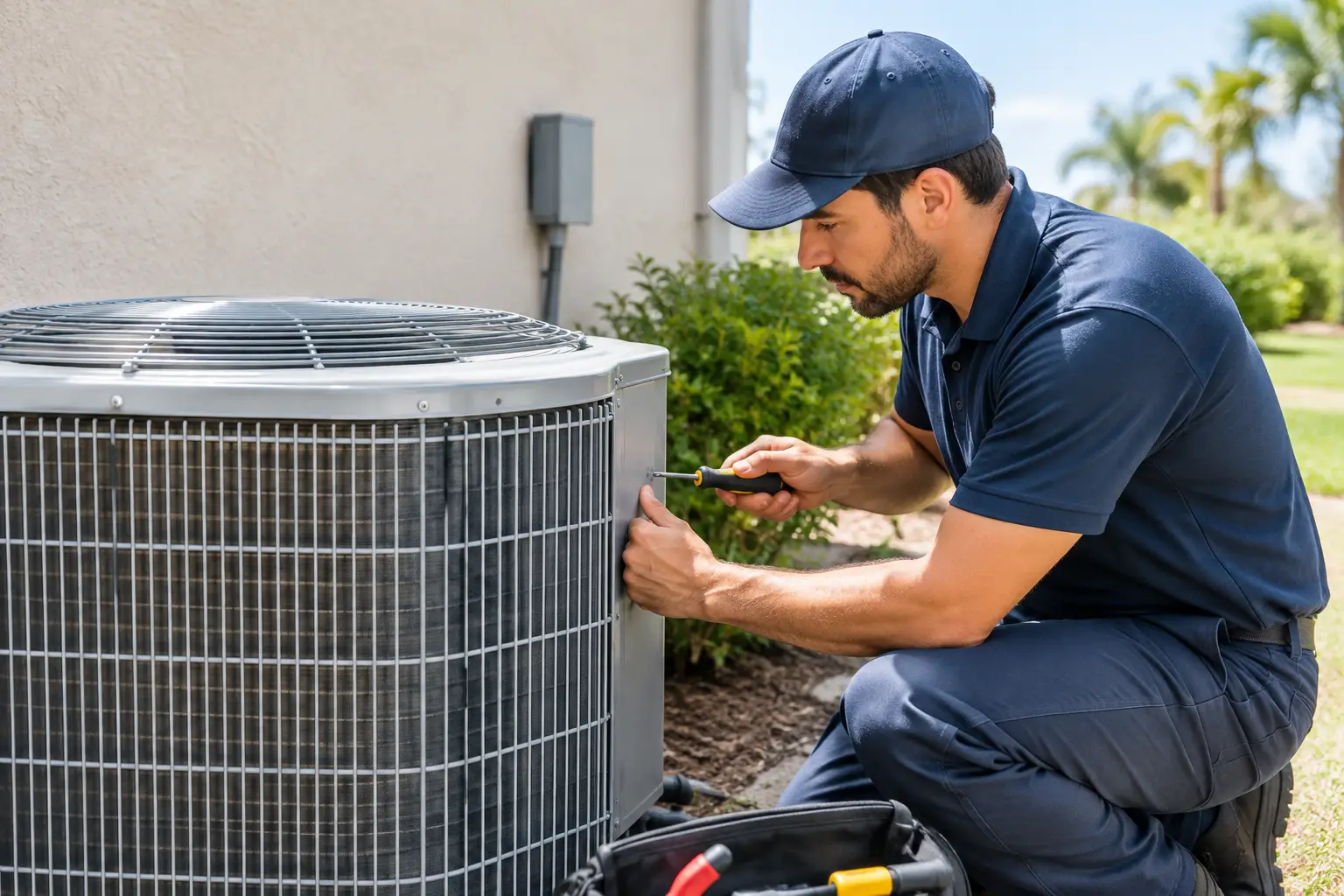
During a thorough service visit, technicians should inspect operating performance, refrigerant pressures when appropriate, electrical connections, capacitors, contactors, blower components, coils, filters, drain lines, safety controls, and thermostat operation. Outdoor equipment should also be checked for corrosion, damaged insulation on refrigerant lines, debris buildup, and clearance problems around the unit.
Homeowners can help between professional visits. Check filters regularly, especially during periods of heavy use or construction nearby. Keep grass, leaves, and stored items away from the outdoor unit. Make sure supply vents and return grilles are open and unobstructed. If you see ice on refrigerant lines or the indoor coil, turn the system off and schedule service rather than continuing to run it.
Maintenance is equally important for commercial equipment, but the stakes can be higher. Restaurants, convenience stores, medical offices, and other facilities may depend on several systems working at once: comfort cooling, walk-ins, reach-ins, ice machines, and ventilation equipment. A maintenance plan helps facility managers track equipment condition, reduce surprise failures, and budget for repairs or replacement with more confidence.
Repair or Replace? Make the Decision on Facts
A repair is often the right answer when the system is relatively new, the issue is isolated, and performance has otherwise been reliable. Replacing a capacitor, contactor, motor, drain component, or control can restore dependable operation without replacing the entire system.
Replacement deserves a serious conversation when breakdowns are recurring, repairs are expensive, energy use is climbing, or the system cannot maintain comfort in normal conditions. Age matters, but it is not the only factor. A well-maintained system may have useful life left, while a younger unit with severe corrosion, chronic refrigerant leaks, or installation problems may cost too much to keep operating.
When comparing new equipment, focus on more than the advertised efficiency rating. Proper sizing, duct condition, humidity control, thermostat setup, installation quality, and available warranty coverage all affect real-world results. A high-efficiency unit installed on leaky ductwork or paired with poor airflow will not deliver the comfort or savings it should.
Financing can make a necessary replacement more manageable, especially when a failed system leaves little time to plan. The goal is not to push a replacement when a repair makes sense. It is to give property owners clear options, honest pricing, and enough information to choose what fits their needs.
Do Not Overlook Ducts, Insulation, and Indoor Air
Your HVAC system cannot overcome every comfort problem by itself. Leaky or poorly insulated ducts can lose cooled air in attics and other unconditioned spaces. Dirty ducts may contribute to airflow concerns in some situations, particularly after construction, pest activity, or long periods without cleaning. Blown-in insulation can also reduce heat gain through the attic, helping the system run less often during hot afternoons.
Indoor air quality deserves attention in humid climates as well. Persistent moisture, stale odors, excess dust, or uneven humidity can point to ventilation, filtration, duct, or equipment performance issues. The best solution depends on the building. Some homes need better filtration and maintenance. Others may benefit from duct repairs, insulation improvements, or humidity-focused equipment adjustments.
When Fast Service Matters Most
If your AC stops cooling during a heat wave, turn the thermostat off if the system is making loud noises, tripping breakers, or showing signs of ice. Check the filter and thermostat settings, but do not keep resetting breakers or running a clearly struggling unit. Those actions can create more damage.
For businesses, have an emergency plan before equipment fails. Know which units serve critical areas, keep service records accessible, and train staff on whom to call when refrigeration temperatures rise or an ice machine stops producing. Precision Air provides residential and commercial service across South Texas, including emergency support when comfort or operations cannot wait.
The most helpful next step is usually simple: pay attention to changes in comfort, airflow, moisture, and runtime, then address them before the next stretch of Gulf Coast heat turns a small issue into an urgent one.
Further reading: Gulf Coast HVAC guide on investopedia.com.
In short, Gulf Coast HVAC guide rewards a careful, informed approach. Use this Gulf Coast HVAC guide guide as a starting framework, adapt it to your situation, and re-check the facts whenever the topic moves.
Related Posts
 Walk In Freezer Guide for South Texas Businesses (2026)
 12 Best AC Maintenance Tips for South Texas