A clean filter will not solve every indoor air problem. If dust keeps returning to your furniture, certain rooms feel stuffy, or a musty smell appears when the AC starts, it may be time to look beyond the equipment itself. The top signs duct cleaning needed are usually noticeable in your living space long before you can see what is inside the ductwork.
- Top Signs Duct Cleaning Needed After Home Renovations
- Why These Are Top Signs Duct Cleaning Needed for Better Air Quality
- Top Signs Duct Cleaning Needed Before Seasonal HVAC Maintenance
- When Duct Cleaning May Not Be the First Step
- What Professional Duct Cleaning Should Address
- Keep Ducts Cleaner Between Services
In South Texas, air conditioning systems run hard for much of the year. That means your return ducts continually pull in air, dust, pet hair, and other particles. A professional duct inspection can determine whether buildup is actually affecting airflow or indoor comfort, rather than selling you a service you do not need.
Top Signs Duct Cleaning Needed After Home Renovations
Home remodeling projects often create large amounts of dust, drywall particles, and debris that can settle inside your ductwork. One of the top signs duct cleaning needed is excessive dust appearing on furniture shortly after cleaning. When construction debris enters your HVAC system, it can continue circulating through your home for months. Professional duct cleaning helps remove these contaminants and restore better indoor air quality.
1. Dust returns quickly after you clean
Some household dust is normal. But if you dust shelves, tables, and ceiling fans only to see a fresh layer within a day or two, your HVAC system may be circulating excess debris.
Check whether your air filter is overdue for replacement first. A clogged or low-quality filter is a common cause of dust problems. If you are replacing filters regularly and the issue continues, dust buildup inside return ducts or supply ducts may be contributing to the problem.
2. You see debris around registers or vents
Take a close look at your supply and return vents. Dark streaks, visible dust clumps, pet hair, or debris just inside the grille can signal that the duct system needs attention.
Surface dust on a vent cover does not automatically mean the entire duct system is dirty. However, visible buildup inside the duct opening, especially when paired with dusty rooms or reduced airflow, is a good reason to schedule an inspection. A technician can assess the condition of accessible ductwork and identify whether cleaning is appropriate.
3. Your home has a persistent musty or stale odor
When the air conditioner turns on, your home should smell like your home, not like a damp closet. A stale, dusty, or musty odor from multiple vents can indicate accumulated debris, moisture concerns, or biological growth somewhere in the HVAC system.
Duct cleaning may help when debris and odor sources are inside the ducts. But odors can also come from a dirty evaporator coil, a clogged condensate drain, wet insulation, a plumbing issue, or mildew in another part of the home. The right solution depends on the source. A reliable HVAC inspection should identify the cause instead of treating duct cleaning as a one-size-fits-all answer.
4. Airflow is weaker in certain rooms
A bedroom at the end of the hall that never seems to cool properly may have more going on than dirty ducts. Restricted airflow can result from duct buildup, but it may also point to a crushed flex duct, disconnected duct section, leaking ductwork, a failing blower motor, an undersized return, or a system that is not properly balanced.
That is why weak airflow deserves a professional diagnosis. Cleaning can remove loose debris that restricts a duct, but it will not repair damaged ductwork or correct an equipment issue. Finding the actual problem protects your comfort and prevents paying for the wrong service.
5. You recently completed remodeling work
Drywall dust, sawdust, insulation fibers, and other construction debris can travel farther than most homeowners expect. Even with careful containment, a renovation can leave dust in return vents and duct runs, especially if the HVAC system operated while work was underway.
After a major remodel, duct cleaning is often worth considering. It is particularly useful when you can see fine construction dust around registers, filters clog much faster than usual, or occupants notice irritation from airborne dust. Replacing filters after the work is complete is still necessary, even if the ducts are cleaned.
6. Pets are shedding heavily indoors
Pets add comfort to a home, but they also add dander and hair to the air system. Most hair should be captured by a properly fitted filter, yet some can collect at return grilles and in ducts over time.
Homes with multiple pets may benefit from more frequent filter changes and periodic duct inspections. Cleaning is most useful when pet hair and debris are visibly present or when the home has ongoing dust and odor concerns. It is not automatically required just because you have a dog or cat.
7. Allergies or respiratory irritation seem worse indoors
If family members experience sneezing, coughing, itchy eyes, or nasal irritation mostly at home, indoor air quality deserves attention. Dirty ducts can be one possible contributor, but they are rarely the only possibility.
Pollen, humidity, carpeting, pet dander, poor filtration, mold, and outdoor air entering through leaks can all affect indoor comfort. In the Coastal Bend, high humidity can make moisture control especially important. A qualified HVAC professional can evaluate filtration, drainage, duct condition, and overall system operation to help narrow down the likely causes.
8. You moved into a previously owned home
You do not always know how the last owner maintained the HVAC system. If the home has visible dust at vents, lingering odors, evidence of pets or smoking, or an old filter left in place, a duct inspection is a practical part of getting settled.
This is also a good time to have the system checked for duct leaks, insulation damage, and maintenance needs. Clean ducts can improve the starting point, but proper filtration and routine system service are what help keep the air system cleaner over the long run.
Why These Are Top Signs Duct Cleaning Needed for Better Air Quality
Many homeowners overlook indoor air quality issues until symptoms become noticeable. Among the top signs duct cleaning needed are increased allergy symptoms, lingering odors, and visible dust buildup around supply vents. Dirty ducts can continuously distribute airborne particles throughout your home, making it harder to maintain a clean and comfortable environment.
Top Signs Duct Cleaning Needed Before Seasonal HVAC Maintenance
Scheduling duct cleaning before peak heating or cooling seasons can improve HVAC performance. Some of the top signs duct cleaning needed include reduced airflow, uneven temperatures between rooms, and excessive dust accumulation near vents. Clean ductwork helps your HVAC system operate more efficiently and can support improved comfort throughout your home.
When Duct Cleaning May Not Be the First Step
Duct cleaning is a valuable service when there is confirmed buildup, construction debris, pest contamination, moisture-related debris, or indoor air concerns tied to the duct system. Still, it is not a substitute for basic HVAC maintenance.
Start with the simple items: replace the filter with the correct size and rating, make sure supply vents are open and unobstructed, and keep return grilles clear of furniture and clutter. If your AC is freezing up, cycling frequently, failing to cool, or making unusual noises, schedule an HVAC service call. Those problems usually require equipment repair, not duct cleaning.
Be cautious of offers that promise to eliminate every indoor air issue for a very low price. A thorough job requires proper equipment, trained technicians, and access to the duct system. Honest recommendations should be based on what is found during an inspection, not on pressure tactics.
What Professional Duct Cleaning Should Address
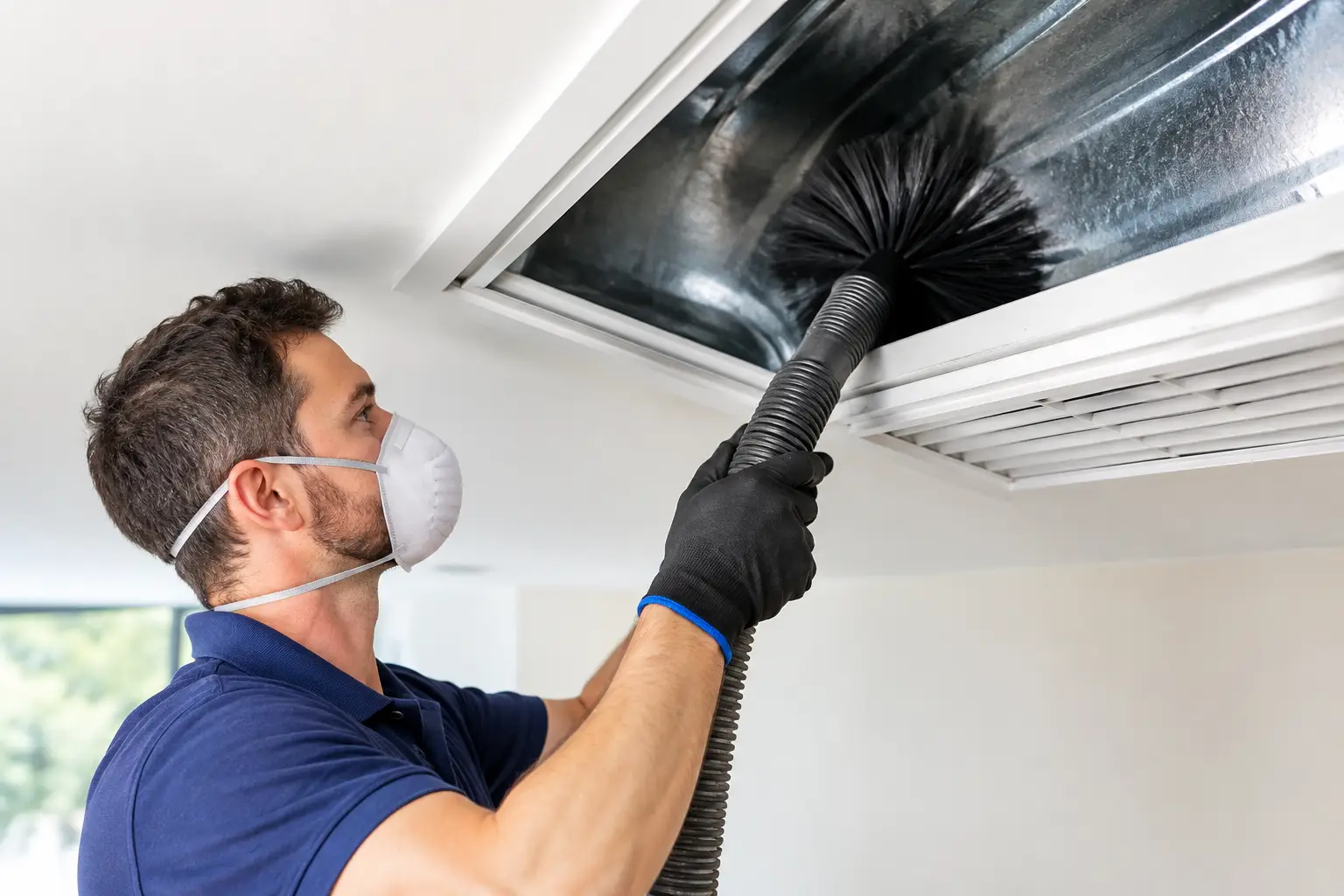
A proper service focuses on removing accumulated dust and debris from the duct system without damaging it. Depending on the layout and condition of your system, technicians may clean supply and return ducts, registers, grilles, and other accessible components.
Before work begins, ask what areas will be inspected and cleaned, whether technicians will check for damaged or leaking ducts, and how they will protect your home during service. If moisture, mold-like growth, pest activity, or insulation damage is found, those underlying issues need to be corrected as well. Cleaning without correcting the cause can allow the problem to return.
For commercial properties, the same principle applies. Offices, retail spaces, restaurants, and other facilities can collect higher levels of dust due to occupancy, renovation activity, and extended operating hours. Facility managers should also consider how duct conditions, airflow complaints, and maintenance schedules affect employee comfort and daily operations.
Keep Ducts Cleaner Between Services
If you’ve noticed several of these top signs duct cleaning needed in your home, it may be time to schedule a professional inspection. Addressing dirty ductwork early can improve airflow, reduce airborne contaminants, and help your HVAC system perform at its best. Understanding the top signs duct cleaning needed allows homeowners to take proactive steps toward maintaining cleaner indoor air and a healthier living environment.
The best way to extend the value of duct cleaning is to maintain the whole HVAC system. Use a properly sized filter and change it on schedule, especially during heavy cooling months. Keep return grilles clean, address water leaks promptly, and schedule preventative maintenance so coils, drains, and blower components are inspected regularly.
If you notice repeated dust, odors, visible debris, or uneven airflow, do not guess at the cause. A straightforward inspection can tell you whether duct cleaning is the right next step or whether your system needs a different repair. Precision Air provides clear recommendations built around what your home or business actually needs, so you can make a confident decision and get back to comfortable indoor air.
Related Posts
 Best Duct Cleaning Methods for Cleaner Air
 Corpus Christi AC Repair Guide for Fast Answers — Best Guide 2026